What Are the Warning Signs That a Car Battery Is Nearing the End?
A car battery rarely becomes weak all at once. In many cases, it slowly loses its ability to hold and deliver power until one day the engine refuses to start. Drivers may miss the early signs because the car still works normally.
Slow engine cranking, dim lights, electrical problems, frequent jump-starts, and a battery that is several years old can all point to a battery nearing the end of its life. In Dubai, extreme heat can speed up battery wear, making it even more important to notice these signs early.
Warning Signs That Your Car Battery Is Getting Weak
A weak battery can affect more than just engine starting. It may also cause changes in the car’s electrical systems. Some signs are easy to notice, while others may only appear from time to time.
Knowing these warning signs can help drivers take action before a complete battery failure leaves them stuck on the road.
1. The Engine Takes Longer to Start
One of the most common signs of a weak battery is slow engine cranking. When you turn the key or press the start button, the engine should normally turn over quickly.
If it sounds slower than usual, the battery may not be providing enough power to the starter motor. A weak start does not always mean the battery is faulty.
A starter problem or charging issue can cause similar symptoms. However, if slow starting happens more often, the battery should be tested. Acting early can help prevent a situation where the engine does not start at all.
2. You Hear a Clicking Sound When Starting
A clicking sound when you try to start the car can be a warning that the battery does not have enough power. The starter may try to engage, but there is not enough electrical energy to turn the engine properly.
One click or repeated clicking can also be linked to loose battery connections or a starter problem. This is why replacing the battery without checking the cause may not solve the issue.
If clicking becomes a regular problem, have the battery, terminals, starter, and charging system inspected to find the real reason.
3. Headlights Become Dim
Your headlights need a steady supply of electricity to work properly. If they appear weaker than normal, especially when the engine is being started, the battery may be losing strength.
Dim lights can also point to an alternator or electrical system problem. The alternator supplies power while the engine is running, so a fault there can affect several electrical parts.
If the headlights become noticeably dim, do not ignore the change. A proper electrical test can determine whether the battery is weak or another part of the charging system needs attention.
4. Electrical Features Start Acting Strange
Modern cars depend on many electrical systems. Power windows, dashboard screens, interior lights, entertainment systems, central locking, sensors, and other features all need a stable electrical supply.
When the battery becomes weak, some features may behave differently. You might notice a screen restarting, lights becoming weak, or electrical functions responding more slowly.
These issues do not always mean the battery is the cause, but they should not be ignored when they happen along with slow engine starting. Testing the battery and charging system can help identify whether low voltage is behind the problem.
5. The Battery Warning Light Appears
A battery-shaped warning light on the dashboard should never be ignored. It often points to a problem with the charging system rather than simply telling you that the battery is old.
The alternator, drive belt, wiring, or battery itself could be responsible. If the light stays on while the engine is running, the vehicle may not be charging correctly.
Continuing to drive for a long time can eventually drain the battery and cause the engine to stop. Get the charging system checked as soon as possible when this warning appears.
6. You Need Jump-Starts More Often
A jump-start can get a car running when the battery is discharged. However, needing one repeatedly is a clear reason to investigate the problem.
An old battery may no longer be able to hold enough charge after starting the engine. A faulty alternator or electrical drain can also cause repeated discharge. If the battery keeps going flat after being charged or jump-started, do not treat the jump-start as a permanent fix.
A battery test and charging system inspection can show whether the battery needs replacement or another component needs repair.
7. The Battery Is Several Years Old
Battery age is another important warning sign. Even when a battery looks clean and the car starts normally, its internal condition can become weaker with time.
Dubai’s hot climate can place extra stress on batteries and may shorten their useful life. As a battery gets older, its ability to hold a charge and provide strong starting power can decline.
If your battery has been in the vehicle for several years, consider having it tested regularly. Knowing its condition can help you plan a replacement before a sudden failure.
8. There Is Corrosion Around the Terminals
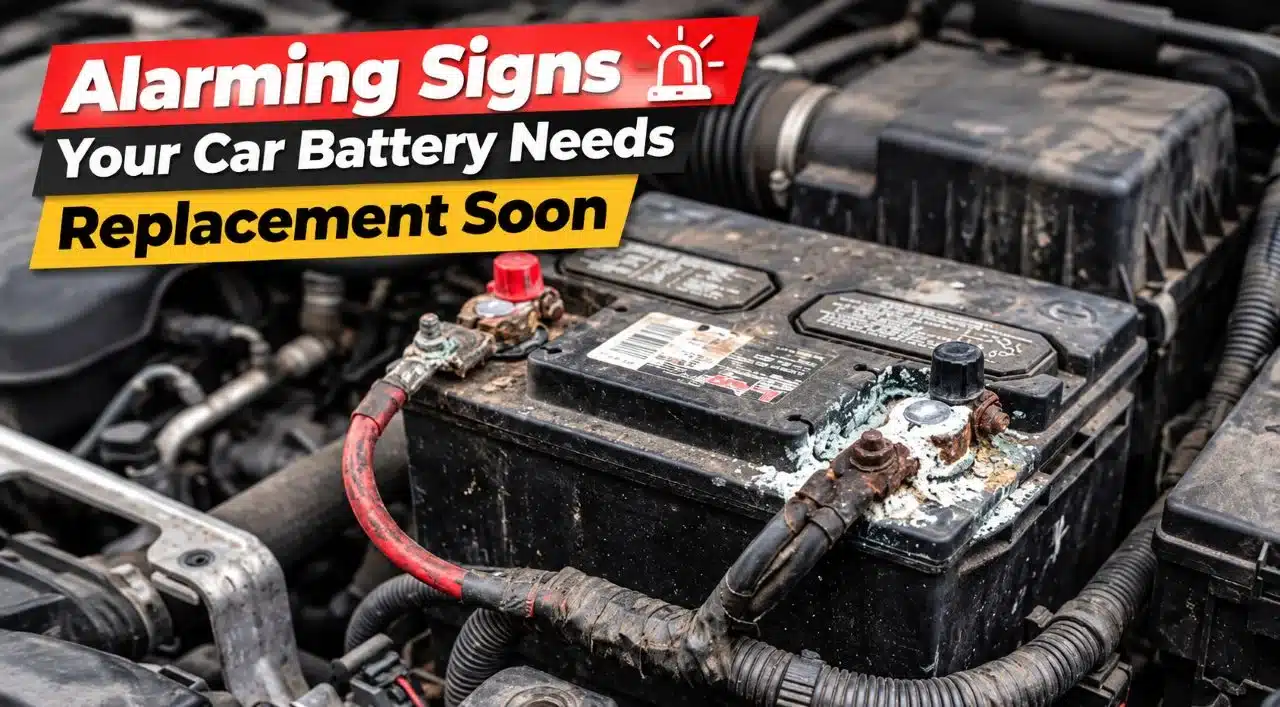
Corrosion around the battery terminals can interfere with the flow of electricity. It may appear as a white, blue, or green buildup around the connections.
Corrosion does not always mean that the battery has reached the end of its life, but it should be inspected. Poor connections can make starting difficult and may prevent the charging system from working correctly.
If corrosion keeps returning, there may be another issue that needs attention. Keeping the terminals clean and connections secure can help maintain good electrical contact.
9. The Battery Case Looks Swollen
A swollen or damaged battery case is a serious warning sign. Excessive heat, overcharging, or internal problems can cause the battery case to change shape.
A battery that looks swollen should not be treated as normal wear. It may no longer be safe or reliable for continued use. Do not try to force the case back into shape or ignore the problem.
Have the battery inspected by a qualified technician and replaced if necessary. In Dubai’s hot climate, checking the battery condition regularly is especially important.
Why Dubai Heat Can Make Battery Problems Worse?
High temperatures can put significant stress on a car battery. Heat increases the chemical activity inside the battery and can speed up the loss of useful capacity. Heat under the bonnet can become even higher when the vehicle is parked in direct sunlight.
This means a battery that might still have some useful life in a cooler climate may become weak sooner in Dubai. Drivers should pay closer attention to battery age and starting performance. Parking in covered areas when possible and checking the battery during routine servicing can help reduce the risk of an unexpected failure.
When Should You Get the Battery Checked?
You should consider a battery check when you notice slow starting, clicking sounds, dim lights, repeated jump-starts, or other electrical changes. It is also wise to test the battery when it is getting older, even if the vehicle still starts normally.
A battery test can show its current condition and starting ability. The charging system should also be checked if there are repeated problems.
If you need car battery replacement in Dubai, Sayara Battery can test your battery first and help confirm whether you need a replacement or whether the issue is linked to the alternator or another electrical part.
Conclusion
A car battery often gives small warning signs before it reaches the end of its useful life. Slow starting, clicking sounds, dim lights, electrical problems, dashboard warnings, repeated jump-starts, corrosion, swelling, and old age should all be taken seriously.
Dubai’s high temperatures can increase battery stress, so regular checks are especially useful. Paying attention to these signs and dealing with problems early can improve reliability, reduce the chance of being stranded, and help you avoid an unexpected battery failure.