Precision Engineering: Essential Care Tips to Keep Your Porsche Track-Ready
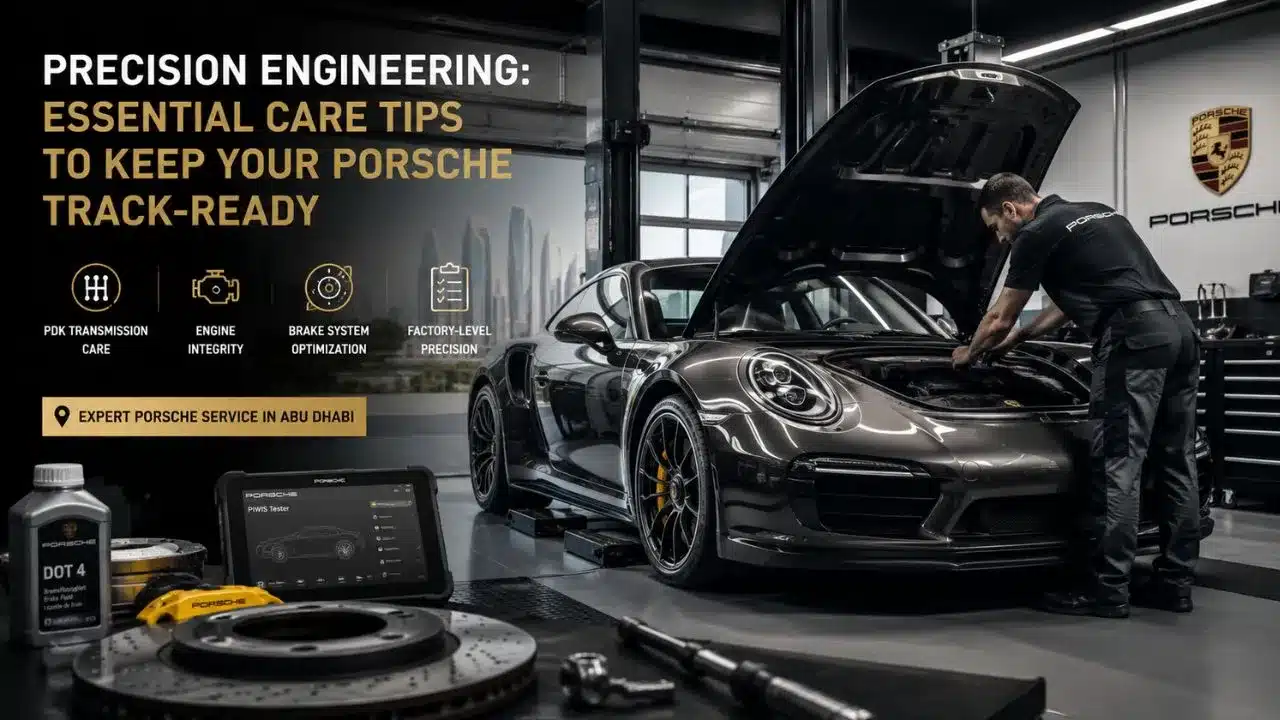
Porsche has perfected the rare art of engineering the ultimate daily drivable sports car. Whether you are navigating the morning commute in a Macan, taking a family weekend trip in a Cayenne, or pushing the physics of cornering to the absolute limit on a track day in a 911, these vehicles deliver an unrivaled connection between driver and tarmac.
However, maintaining this legendary level of high-performance versatility requires a strict commitment to precise, scheduled mechanical upkeep. Porsche vehicles operate at higher compression ratios, tighter tolerances, and greater thermal loads than standard road cars.
Skipping or delaying specialized maintenance does not just lower your lap times—it can trigger accelerated, catastrophic component wear that risks permanent engine or drivetrain damage. To preserve the surgical handling and explosive acceleration of your vehicle, investing in factory-grade porsche repair abu dhabi is the single most vital decision you can make as an owner.
Owning a Porsche means taking responsibility for a sophisticated racing pedigree. To keep your vehicle perfectly balanced between street civility and track-ready aggression, several highly technical, model-specific checkpoints require specialized, master-level attention.
1. Safeguarding the PDK Dual-Clutch Transmission
Porsche’s Doppelkupplung (PDK) transmission is widely regarded as one of the most advanced dual-clutch gearboxes in the automotive world, executing lightning-fast, seamless gear changes in milliseconds. The PDK relies on two separate, independent fluid circuits to function: one for the complex hydraulic control unit (the valve body and wet clutch packs) and one for the mechanical gear train.
- The Thermal Threat: Under aggressive track driving or stop-and-go city commuting in high ambient temperatures, the transmission fluid is subjected to immense thermal shear stress. Over time, microscopic friction material from the clutches degrades the fluid’s viscosity, compromising clutch engagement pressures and slowing down shift response times.
- The Service Protocol: Maintaining a PDK requires precise fluid flushes using exact manufacturer-approved synthetic lubricants. Technicians must use specialized diagnostic software to monitor real-time fluid temperatures during the refill process, ensuring the fluid level is calibrated perfectly to prevent internal cavitation and clutch slippage.
2. Specialized Engine Integrity: IMS Bearings and Bore Scoring
Depending on the specific generation and model of your Porsche, there are internal engine architectures that demand proactive, highly technical monitoring to prevent catastrophic mechanical failure.
- Intermediate Shaft (IMS) Bearing: For specific water-cooled flat-six engines produced between 1997 and 2008, the IMS bearing is a critical wear item. If the internal factory grease seal degrades, engine oil washes away the lubricant, leading to sudden bearing failure and total engine destruction. Specialists carefully cut open the oil filter during routine services to check for microscopic metallic flakes, flagging an IMS issue before it manifests physically.
- Cylinder Bore Scoring: In cold or extremely hot climates, specific direct-injection engines can suffer from bore scoring—where the protective anti-friction coating on the cylinder walls wears down, causing the piston skirt to scratch the engine block. Catching this early requires an expert technician to perform a digital borescope inspection through the spark plug holes, saving you from a highly expensive engine rebuild.
3. Brake System Optimization Under Extreme Loads
Porsche brakes are engineered to offer immense, fade-free stopping power. Whether your vehicle is equipped with the standard iron rotors or the high-performance Porsche Ceramic Composite Brakes (PCCB), the entire braking system operates under extreme kinetic energy and thermal loads.
- Brake Fluid Hydroscopy: Brake fluid naturally absorbs moisture from the atmosphere over time. Under hard track braking, this absorbed water can boil and turn into gas bubbles within the brake lines, resulting in a soft, spongy brake pedal and a dangerous loss of stopping power. Porsche requires a complete brake fluid flush every two years using premium, high-boiling-point DOT 4 fluids.
- Rotor and Pad Alignment: For track drivers, monitoring pad thickness and checking iron rotors for micro-cracks around the cross-drilled ventilation holes is essential. Ceramic rotors must be measured using a specialized optical density tool to ensure they haven’t suffered material degradation from high-temperature track sessions.
Dealership-Level Precision for Discriminating Drivers
Cutting corners with generic, multi-brand service centers that use non-approved aftermarket parts can quickly ruin the finely tuned driving dynamics of your vehicle. A Porsche demands a level of technical exactness that mirrors the factory assembly line in Stuttgart, ensuring every tolerance is met with absolute precision to preserve both performance and long-term resale value.
At the Al Zaabi Auto Care center, we treat your sports car or luxury SUV with the uncompromising care and factory-level precision it deserves. Our advanced facility is fully equipped with Porsche-specific diagnostic platforms, specialized calibration tools, and staffed by master technicians who understand the unique engineering nuances of the flat-six, V6, and V8 powertrains. Whether you need a precise PDK fluid service before your next track weekend or a routine milestone inspection for your daily commuter, we provide the ultimate dealership alternative. Contact our team today to schedule an appointment and experience the definitive standard of care that makes us a premier porsche service center abu dhabi for owners who refuse to compromise on quality.