How Cloud Based E Invoicing Solutions Improve Financial Efficiency
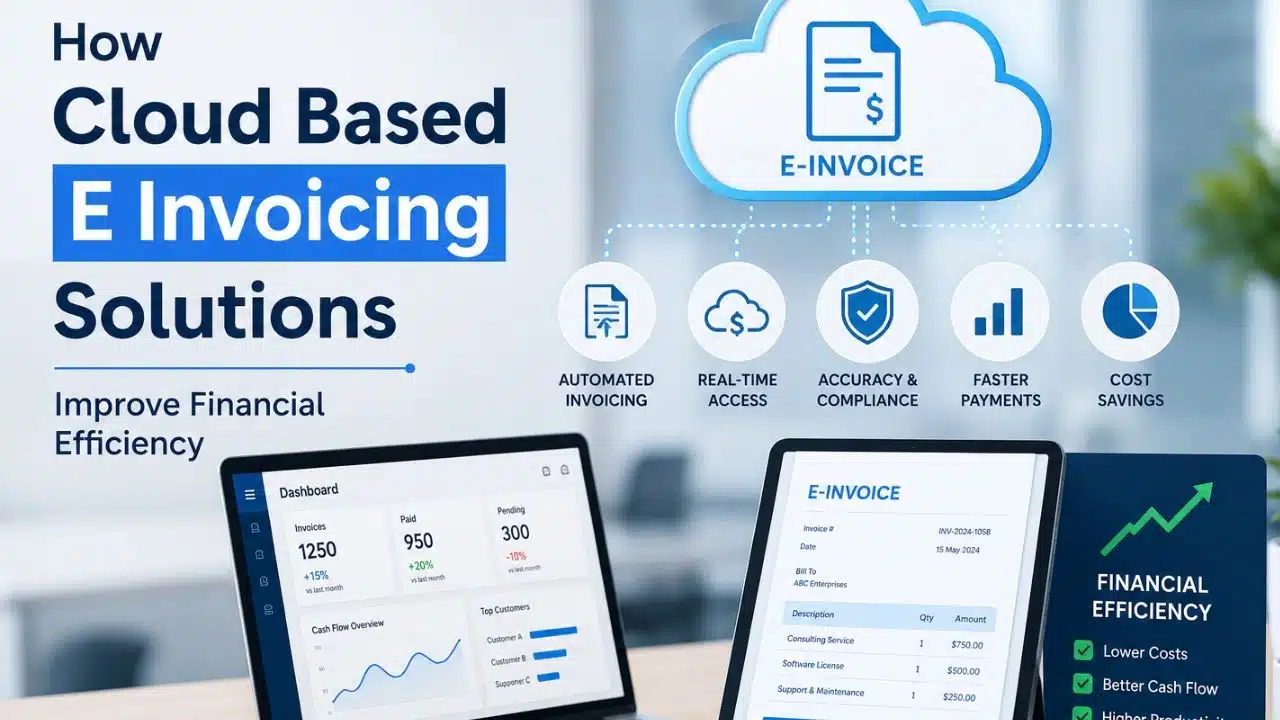
Managing invoices manually can slow down your business more than you realise. Chasing approvals, fixing data entry mistakes, and tracking unpaid invoices often waste valuable time and money. This is where cloud-based e-invoicing solutions make a real difference. They help you automate invoicing tasks, improve payment tracking and keep financial records organised from one place.
Benefits of Cloud-Based E-Invoicing
Here are 10 practical ways cloud-based e-invoicing solutions improve financial efficiency for your business.
1. Faster Invoice Processing
When you create invoices manually, the process takes time and increases the chances of delays. Cloud-based e-invoicing systems automate invoice creation, sharing, and approval. You can generate invoices in minutes and send them to customers or vendors instantly.
This faster workflow helps you reduce billing cycles and improve cash flow without adding extra administrative work.
2. Fewer Human Errors
Manual invoicing often leads to calculation mistakes, duplicate entries, missing tax details or incorrect customer information. Even small errors can lead to payment disputes or compliance issues.
Cloud-based invoicing software automatically calculates taxes, applies invoice formats and securely stores customer details. This reduces the risk of errors and helps you maintain accurate financial records.
3. Better Cash Flow Management
Late payments can affect your daily operations and future planning. E-invoicing platforms allow you to track invoice status in real time. You can instantly see which invoices are paid, overdue or pending approval.
Many systems also send automated payment reminders to customers. This improves collection efficiency and helps you maintain healthier cash flow throughout the month.
4. Real-Time Financial Visibility
Cloud-based e-invoicing process gives you access to live financial data anytime you need it. Instead of waiting for end-of-month reports, you can monitor revenue, pending payments, tax liabilities and expenses in real time.
This visibility helps you make faster financial decisions and plan budgets more accurately.
5. Lower Operational Costs
Printing invoices, storing paperwork, and managing manual accounting processes increase operational costs over time. Cloud-based e-invoicing reduces dependency on paper, physical storage and repetitive administrative work.
You also spend less money on courier services, document handling and manual reconciliation tasks, which improves overall cost efficiency.
6. Easier Tax Compliance
Tax regulations and invoicing rules continue to evolve.. Cloud-based invoicing systems regularly update tax formats and compliance rules automatically.
This helps you generate compliant invoices, maintain digital records and simplify return filing processes. It also reduces the risk of penalties caused by incorrect invoice reporting.
7. Secure Data Storage
Financial documents contain sensitive business information that needs proper protection. Cloud invoicing platforms usually offer encrypted storage, automatic backups and controlled user access.
Even if your system crashes or devices fail, your invoices and financial records remain safely stored online. This reduces the risk of data loss and improves business continuity.
8. Improved Team Collaboration
When finance teams work from different locations, manually sharing invoice updates can be difficult. Cloud-based systems allow authorised employees, accountants and business owners to access invoice data from anywhere.
This improves coordination between departments and speeds up approval workflows without depending on physical files or emails.
9. Easy Integration
Modern e-invoicing platforms integrate directly with accounting software, ERP systems, payment gateways and banking platforms. This removes the need for repeated data entry across multiple systems.
As a result, your financial data stays synchronised automatically, which saves time and improves reporting accuracy.
10. Better Scalability
As your business grows, managing invoices manually becomes harder. Cloud-based invoicing solutions are designed to handle increasing transaction volumes without major infrastructure changes.
You can add users, manage multiple clients, track payments across locations and generate reports more efficiently as operations expand. This allows your financial processes to scale smoothly along with your business growth.
Final Thoughts
Cloud-based invoicing solutions are no longer just a convenience. They have become an important tool for improving financial efficiency, reducing manual work and maintaining accurate records. From faster invoice processing to better cash flow tracking and compliance management, these systems help you save both time and operational costs.
If you want your business finances to become more organised, transparent and scalable, adopting a cloud-based e-invoicing solution can be a smart long-term decision.