How to Choose the Right Insurance Plan in the UAE Without Overpaying
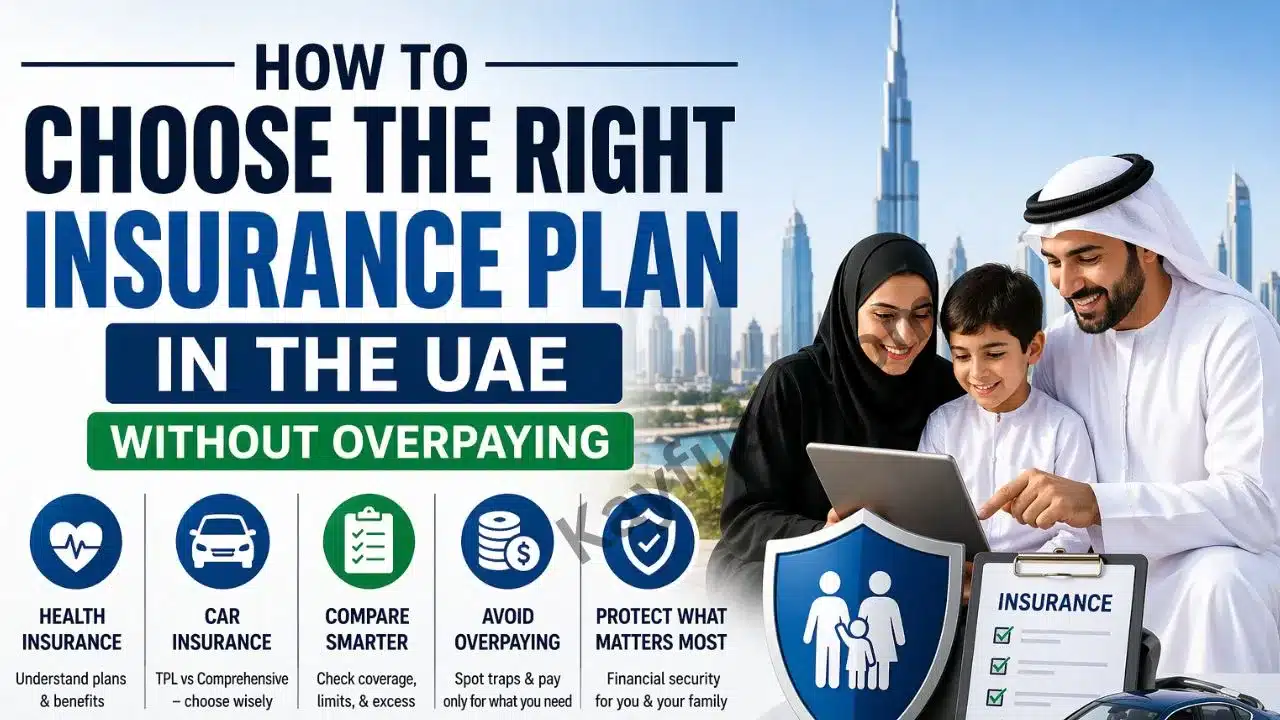
Many UAE residents feel lost when choosing health insurance or the best car insurance in the UAE. Policies are full of jargon, and most people focus only on price. That is exactly how overpaying – or buying the wrong cover – happens.
UAE insurance and health insurance fundamentals: Here is a practical way to choose wisely without spending more than you need.
Step 1 – Define Your Actual Coverage Needs
Insurance is a financial safety mechanism, not a luxury add‑on or a savings account. It exists to protect you from high‑cost, unpredictable events, not to make every routine cost-free.
Before looking at plans, write down:
- What big risks you actually want to protect: Such as serious accident or illness, Major car damage or total loss or Liability to others (car, life, health)
- Who depends on your income or support
- Your realistic budget what you can pay every year without stress
If you skip this step, you are more likely to buy benefits you will never use, or cut the very protections that matter most when things go wrong.
Step 2 – Understand Health Insurance Tiers in the UAE
- Mandatory health insurance exists to provide a minimum safety net, not unlimited care.
- Regulators in each emirate set minimum benefit standards, but basic plans have structural limits: lower annual limits, smaller networks, co‑pays, waiting periods, and exclusions. Enhanced plans add higher limits, broader networks, and lower cost‑sharing – at a higher premium.
Key ideas:
- Low‑cost plans are cheaper because they:
- Restrict benefits and networks
- Use co‑pays and deductibles
- Cap some services with sub‑limits
- “Cheap but covers everything” does not exist. A lower price always means controlled access or higher out‑of‑pocket costs.
To avoid overpaying:
- Do not buy a high‑end plan if you mostly use routine outpatient care and are comfortable with co‑pays.
- Do not rely only on a low‑cost plan if you use expensive hospitals often, have complex conditions needing frequent specialist care, or need broader networks for work or family reasons
Step 3 – Find the Best Car Insurance in the UAE for Your Vehicle
There are primarily two main choices:
- Third‑Party Liability (TPL) – legal minimum – Covers damage/injury you cause to others (including Blood Money). Does not cover damage to your own car.
- Comprehensive car insurance – Includes TPL, it adds: Own damage to your car in covered accidents, Fire & Theft, Standard benefits such as Riot & Strike, and more.
- depending on the insurer
- Can be enhanced with Roadside assistance, Off‑road cover (with exclusions), Hire car benefit, GAP cover, and Personal accident benefits
Calculations premiums broadly follow:
Premium ≈ Vehicle Market Value × Base Rate + Optional Covers + VAT
To avoid overpaying:
- Value your car realistically (current market value, not old invoice).
- If your car is new or financed, comprehensive is usually the right choice.
- If your car is older and low‑value, TPL may be enough if you accept the risk to your own car.
- Only add extras that match your life (e.g., roadside for long commutes, off‑road cover if you actually go off‑road).
Step 4 – Compare Properly, Not Just on Price
Most complaints come from expectation gaps, not missing cover. To compare:
For health insurance, check the annual limit, co-pays, and deductibles, Network type (clinics vs hospitals, geography), along with Exclusions, waiting periods, and pre‑existing condition rules
For car insurance, check TPL vs Comprehensive, Excess (deductible), Agency vs network garages, included benefits (Roadside, Hire car, GAP, off‑road), also named driver vs any driver conditions
Side‑by‑side, ask:
- “What catastrophic events does this plan protect me from?”
- “What will I still pay myself if something big happens?”
Let top aggregator platforms in the UAE, like InsuranceMarket.ae, help you compare quotes in minutes so you see benefits, limits, and excess – not just one final number.
Common Overpaying Traps and How to Avoid Them
- Buying only on price
- Trap: choosing the lowest premium without reading limits or networks.
- Fix: always check what is not covered and where you can actually use the plan.
- Assuming “mandatory” means “full.”
- Mandatory health plans are minimum floors, not premium covers.
- Explain to yourself (and family) what the plan will realistically pay for – and what it will not.
- Over‑valuing cars
- Leads to higher motor premiums without higher total‑loss payouts (indemnity limits payout to real value).
- Choose a realistic value based on the market, not emotion.
- Under‑disclosing information
- Not telling the full health history or claims history to “save money” can backfire at claim time.
- Utmost Good Faith means: better a slightly higher correct premium than a declined claim later.
- Buying every add‑on “just in case.”
- For both car and travel insurance, add‑ons should match your actual usage.
- Ask: “When would I realistically use this benefit?” If the answer is “almost never”, reconsider.
Conclusion & CTA
Choosing the right insurance plan in the UAE without overpaying is less about finding a magic “best” product and more about:
- Knowing what you actually need to protect
- Understanding the trade‑offs between basic vs enhanced health plans
- Matching your car cover to your vehicle’s real value and usage
- Comparing plans on coverage, limits, networks, and excess, not price alone
- Avoiding over‑promising, under‑disclosing, and over‑buying add‑ons
If you want help applying this framework to your own situation:
Frequently Asked Questions
How do I know if I am overpaying for health insurance in the UAE?
You might be overpaying if:
- Your plan’s network is far broader or more premium than you ever use.
- You are paying for high annual limits, but mostly claim for small GP visits.
- You have overlapping covers (employer plan + personal plan) that duplicate the same basic benefits.
Review your last year’s usage, then match it against what you are buying.
2. What is the best car insurance in the UAE for a 3‑year‑old vehicle?
- There is no single “best”; it depends on the market value of the car, whether it is financed or not, your driving profile, and your budget. For a typical 3‑year‑old car, comprehensive cover with a balanced excess, sensible valued add‑ons (roadside, maybe hire car) and a realistic insured value is often a strong choice. Comparing several comprehensive quotes will show which gives the best value.
3. Does UAE health insurance cover pre‑existing conditions?
- Pre‑existing conditions are handled through waiting periods, Specific coverage rules, and sometimes moratorium approaches. Coverage and timing depend on the plan and the regulator’s rules. Always check how a plan defines and treats pre‑existing and chronic conditions before you buy.
4. Can I negotiate insurance premiums in the UAE?
- You cannot “negotiate away” risk or regulation, but you can influence premiums by:
- Adjusting coverage (basic vs enhanced)
- Choosing realistic annual limits
- Accepting reasonable co‑pays or excess
- Removing add‑ons you do not need
In effect, you negotiate by choosing the right structure, not by asking someone to ignore risk.
5. What questions should I ask an insurer before signing up?
- For health:
- “What is my annual limit?”
- “Which hospitals and clinics are in the network?”
- “What co‑pays apply to outpatient, pharmacy, and maternity?”
- “How are pre‑existing conditions handled?”
- For car:
- “Is this TPL or comprehensive?”
- “What is my excess?”
- “Agency or network repair – for how long?”
- “Which add‑ons are included and which cost extra?”
If the answers are unclear or not in writing, pause.